

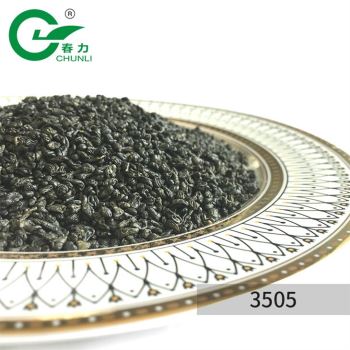
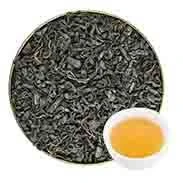
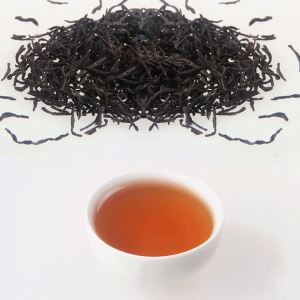


Zhejiang Chunli Tea Co., Ltd. is one of the leading manufacturers and suppliers of premium chunmee green tea 9371 cheap flecha in China. Welcome to wholesale high quality premium chunmee green tea 9371 cheap flecha at low price from our factory. If you have any enquiry about free sample, please feel free to email us.
Chunmee Green Tea 9371 - Pan-Fired Eyebrow Tea Bulk Supply | Chunli Tea × Your Brand | Special Grade 1, 3,000-Ton Mee Tea Refining Capacity, EU MRL Ready
Zhejiang Chunli Tea Co., Ltd. supplies Chunmee 9371 under your brand as a pan-fired Chinese eyebrow tea - not a steamed Japanese Sencha. 9371 is 特珍一级 (Special Grade 1) in the Chinese Mee tea classification: long, thin, eyebrow-shaped leaf, pan-fired kill-green, mellow and smooth liquor. Moisture ≤7.0%. Main markets: Algeria, Libya, North/West Africa. Production backed by a planned 3,000-ton automatic intelligent Mee tea refining workshop (2026 build-out). EU MRL panel available per lot via SGS/Eurofins. MOQ 1×20'FCL. FOB Ningbo/Shanghai.
This page exists because "Chunmee 9371" and "Sencha" are not two names for the same tea - they are two different kill-green technologies, and conflating them is a procurement error, not a wording choice. Chinese green tea is classified by how the leaf is heated to stop oxidation: (pan-fired), (baked), (sun-dried), and (steamed)[reference:9]. Chunmee 9371 is the refined product of (long pan-fired green tea): the leaf is kill-green in a hot wok or drum, rolled, and dried, producing the long, thin, eyebrow-like strips that give "Precious Eyebrow Tea" its name[reference:10][reference:11]. Sencha is the Japanese path: the leaf is steamed immediately after plucking, then rolled and dried, producing a different colour, aroma, and cup[reference:12]. A 9371 page that describes Sencha processing is describing a different product. This page describes the pan-fired path.
Under Chunli Tea × Your Brand, your brand appears on the kraft bag, the woven bag, or the private label carton; Chunli Tea is the manufacturer of record and issues the lot COA, the third-party residue report, and the packing list against the format you order. 9371 is the old Special Grade that built the North African trade: Algeria and Libya lean toward 9371 and 4011, while Nigeria runs on 4011 and 8147[reference:13][reference:14]. In the Chinese Mee tea classification, 9371 is Special Grade 1), sitting just below 41022 and above 9370. What separates one 9371 supplier from another in these markets is not the adjective - it is whether the factory can reproduce the leaf style, the moisture limit, and the residue profile across shipment 5 and shipment 15. The sections below set out the processing specification, the grade position, the capacity backing, and the commercial terms.
Pan-Fired vs Steamed - Why 9371 Is Not Sencha
| Process Variable | Chunmee 9371(Pan-Fired) | Sencha(Steamed) | Procurement Consequence |
|---|---|---|---|
| Kill-green method | Hot wok or drum; leaf heated by contact with a hot surface | Steam; leaf heated by high-temperature steam immediately after plucking | The two are different product categories; a 9371 specification cannot be satisfied by a steamed leaf |
| Leaf shape | Long, thin, curved, eyebrow-like | Needle-like or flat, depending on the Sencha grade | The leaf style is a grade identifier for 9371; a Sencha leaf would fail the appearance check |
| Liquor character | Pale yellow-green; mellow, smooth, plum-like direction | Deep green; marine, vegetative, umami-forward | 9371 is specified for markets that expect a pan-fired cup; Sencha's flavour profile is a different brief |
| Standard / classification | Chinese Mee tea: 41022 → 9371 → 9370 | Japanese Sencha grades, not part of the Chinese Mee tea classification | 9371 is a numbered grade in the Chinese export system; Sencha is not a substitute |
| Primary export markets | Algeria, Libya, North/West Africa; European specialty in some programmes | Japan, Western specialty and foodservice | The market fit is different; a 9371 buyer is not shopping for Sencha |
Process note: the distinction is not academic. Chunmee is the refined product of ; iGunpowder is the refined product ; and is a separate category defined by steam kill-green[reference:16]. A factory that runs a pan-fired Mee tea line and a steamed Sencha line is running two different process flows. This page covers the pan-fired flow. No Sencha claim is made on this page, and no Sencha process is described as part of 9371.
9371 Grade Position & Release Specification
| Parameter | 9371 Declared Range | Basis / Reference | Buyer Verification |
|---|---|---|---|
| Grade position | (Special Grade 1) in the Chinese Mee tea classification | Mee tea standard: 41022→ 9371 → 9370 | Grade code stated on invoice and COA; retained sample comparison |
| Leaf appearance | Long, thin, eyebrow-shaped; relatively uniform | Chunmee / Precious Eyebrow trade specification[reference:18] | Visual check against the retained reference sample |
| Processing | Pan-fired; kill-green in a hot wok or drum, then rolled and dried | Chinese long pan-fired green tea process[reference:19] | Process record; retained sample's leaf colour and aroma |
| Liquor | Pale yellow-green; mellow, smooth | 9371 trade specification[reference:20] | Sensory release record |
| Moisture | ≤7.0%(ideally under 7%) | Export standard; Chunli Tea bulk guidance[reference:21] | COA; buyer can re-test with a moisture meter |
| EU MRL compliance | Per-lot SGS or Eurofins panel against the EU framework, where EU is the destination | EU MRL for tea; high-risk actives include anthraquinone and certain pyrethroids[reference:22] | Third-party residue report linked to the lot |
| Organic status | No organic claim made for standard 9371; organic only where a valid certificate covers the specific lot | Standard commercial grade | Certificate scope confirmation, only where applicable |
Specification note: 9371 is a number-coded commercial grade, not a standardized international specification. As Chunli Tea's own bulk guidance notes, "one producer's 9371 can pass for another's 41022 on paper" - the code alone does not guarantee a specific leaf[reference:23]. That is why the retained reference sample and the physical specification sheet are the contractual controls, not the grade number in isolation.
Production Backing - What Supports a Repeat 9371 Programme
| Capacity / Control | Figure / Status | 9371-Relevant Meaning |
|---|---|---|
| Mee tea refining workshop(2026 build-out) | 3,000 tons/year automatic intelligent Mee tea refining | Dedicated 眉茶 capacity for 9371 and related grades; the line that produces the long pan-fired leaf style |
| Intelligent production line(operational) | Commissioned April 2025; 200,000 jin(≈100 MT)green leaf/day | Consistent kill-green and rolling at scale; the process variable behind 9371 leaf uniformity |
| Export blending workshop(2026 build-out) | 10,000 tons/year | Batch homogenisation across repeat 9371 releases |
| Total annual capacity target | 20,000 tons(four-workshop build-out) | Annual 9371 framework volume can be absorbed |
| Documented export markets | Algeria, Libya, North/West Africa; European market participation | Destination compliance experience for 9371 already embedded |
| Batch consistency controls | Blending sheet; homogenisation before packing; sealed retained reference sample | Shipment 5 matches shipment 1 on leaf style and cup |
Capacity note: the 3,000-ton Mee tea refining workshop is part of the 2026 build-out and is being commissioned. Current 9371 orders are sourced from the operational intelligent line and existing refining capacity; annual frameworks can be planned against the expanded Mee tea capacity. The distinction matters - 9371 is a 眉茶 grade, and the relevant capacity is the Mee tea line, not the Gunpowder (珠茶) line.
Packing & Loading - What a 9371 Container Carries
| Packing Format | Unit Weight | 20'FCL Load | 40HQ Load | Market Fit / Note |
|---|---|---|---|---|
| Woven bag with inner liner | 25 kg / 30 kg | 12–14 MT | ~23 MT | Standard North/West Africa bulk; the working configuration for 9371 |
| Kraft bag / paper bag | 35 kg / 40 kg | Per load plan | 21–24 MT | Algeria and Nigeria bulk; paper-bag format common in these markets[reference:24] |
| Carton | 20 kg / 40 kg | Per carton configuration | Per carton configuration | EU or distributor receiving; pallet standard declared at RFQ |
| Retail pack / private label | 25 g – 1 kg | - | - | MOQ 2 MT; artwork and label compliance reviewed at approval |
Loading note: a 20'FCL of 9371 in 25 kg woven bags loads roughly 12–14 tonnes; a 40HQ loads approximately 23 tonnes[reference:25][reference:26]. Paper-bag formats in the 35–40 kg range are common for Algeria and Nigeria and can reach 21–24 MT per 40HQ depending on bag dimensions[reference:27]. Declare the receiving constraint at RFQ and the load plan is confirmed against the format you will actually unload.
Commercial Terms - Chunli Tea × Your Brand
| Item | Standard Bulk | Private Label / Retail Pack |
|---|---|---|
| MOQ | 1×20'FCL(approximately 12–14 MT for 9371 in 25 kg bags) | 2 MT |
| Brand position | Your mark on woven bag or kraft bag; Chunli Tea as manufacturer of record | Your brand on retail pack; Chunli Tea supplies production and compliance record |
| EU MRL panel | Per lot or per contract frequency; SGS or Eurofins; configured against EU framework where EU is the destination | Same, plus retail-label compliance review |
| Lead time | 15–25 days after confirmation | 20–30 days including artwork and packing material |
| Loading port | Ningbo / Shanghai | Ningbo / Shanghai |
| Certifications held | ISO 9001, ISO 22000, HACCP, SC, FDA; self-export licensed since 1998 | Same factory certification set |
| Organic status | No organic claim for standard 9371; organic only where a valid certificate covers the lot | Same |
B2B Procurement FAQ - 9371 Pan-Fired Eyebrow Tea
Q1. Is 9371 a Sencha? The old page mentioned Sencha - is that correct?
No. 9371 is a Chinese pan-fire, the refined product . Sencha is a Japanese steamed green tea. The two use different kill-green technologies and produce different leaf styles, liquors, and grade classifications. The old page's Sencha reference was a product-concept error; this page describes the pan-fired path and makes no Sencha claim.
Q2. What does "9371" actually mean in the Mee tea grading system?
In the Chinese Mee tea classification, Zhenmei is divided into grades: 41022, 9371, 9370, followed by 9369 and below. 9371 is therefore the second tier within the top segment - above the standard 珍眉 grades, below 41022. It is the old Special Grade that built the North African trade, and it remains a volume grade in Algeria and Libya[reference:29][reference:30].
Q3. What is the difference between 9371 and 41022?
41022 is , the top of the Mee tea classification: tightly rolled, largely unbroken leaf, positioned for premium retail tins and European specialty shelves[reference:31]. 9371, one step below: long, thin, eyebrow-shaped leaf, with a commercial tolerance appropriate to North/West African bulk markets. The price gap between the two grades is real, and so is the leaf difference - 41022 commands the premium, 9371 carries the volume.
Q4. Why does 9371 need a Mee tea refining workshop, not a Gunpowder workshop?
Because 9371 is a (Mee tea) grade, produced from Gunpowder is the refined product - a different leaf shape and a different process flow[reference:32]. Chunli Tea's 2026 build-out includes a dedicated 3,000-ton automatic intelligent Mee tea refining workshop, which is the relevant capacity backing for 9371. A Gunpowder line cannot substitute for a Mee tea line when the leaf style is the specification.
Q5. What moisture limit should we specify for 9371?
≤7.0%, ideally under 7%[reference:33]. Moisture is the single most important storage parameter for bulk 9371 shipped to tropical or humid destinations - above 7% free water, mould risk rises and the pan-fired aroma flattens. The lot COA states the measured moisture; the buyer can re-test with a calibrated moisture meter at arrival. Tighter limits(≤6.5%)can be written into the PO where the route or the warehouse humidity requires it.
Q6. What does a 20'FCL and a 40HQ actually carry in 9371?
In 25 kg woven bags, a 20'FCL carries roughly 12–14 tonnes and a 40HQ approximately 23 tonnes[reference:34][reference:35]. In 35–40 kg paper bags, a 40HQ can reach 21–24 tonnes depending on bag dimensions - a format common in Algeria and Nigeria[reference:36]. The load plan is calculated against the bag format and the receiving warehouse's handling capability, not against a generic container maximum.
Q7. Is 9371 organic, and can it be sold in the EU as organic?
No organic claim is made for standard 9371 on this page. If your EU buyer requires organic 9371, it is confirmed per lot against a valid EU organic transaction certificate. An organic claim without that certificate is, in Chunli Tea's own words, "worthless paper"[reference:37]. State the organic requirement at RFQ and the certificate scope is checked against the specific lot before sampling.
Q8. What documents and compliance controls accompany a 9371 lot?
Commercial invoice(grade stated as 9371), packing list, COA(moisture, total ash, water extract, leaf appearance), phytosanitary certificate, certificate of origin, and health certificate where required. For EU destinations, a per-lot SGS or Eurofins residue report against the EU MRL framework is issued - anthraquinone and certain pyrethroids must be explicitly covered[reference:38]. A generic certificate from three years ago is not accepted as a substitute[reference:39]. No organic certificate is included for standard 9371 because no organic claim is made.
Hot Tags: premium chunmee green tea 9371 cheap flecha, China, suppliers, factory, wholesale, cheap, low price, free sample, Chunmee Green Tea 41022, Green Tea Chunmee 9367 Maroc, Oem Chinese Tea Factory, China Green Tea Special Chunmee 9371, Extra fin Chunmee 4011, Chunmee Tea 41022AAA


