

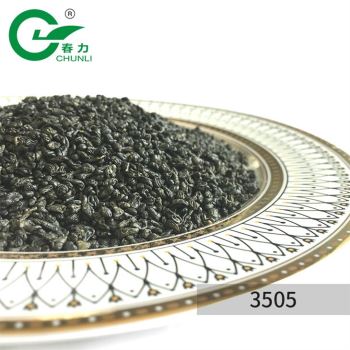

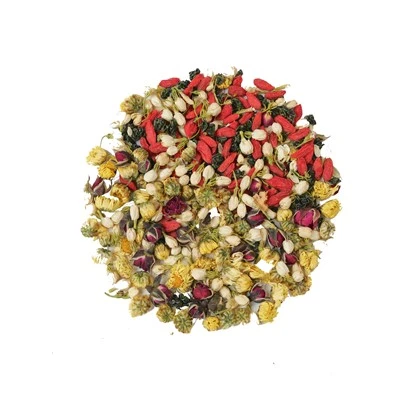
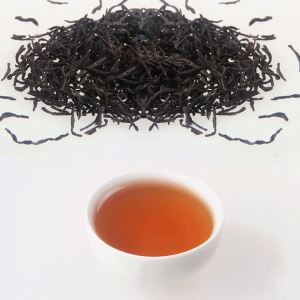
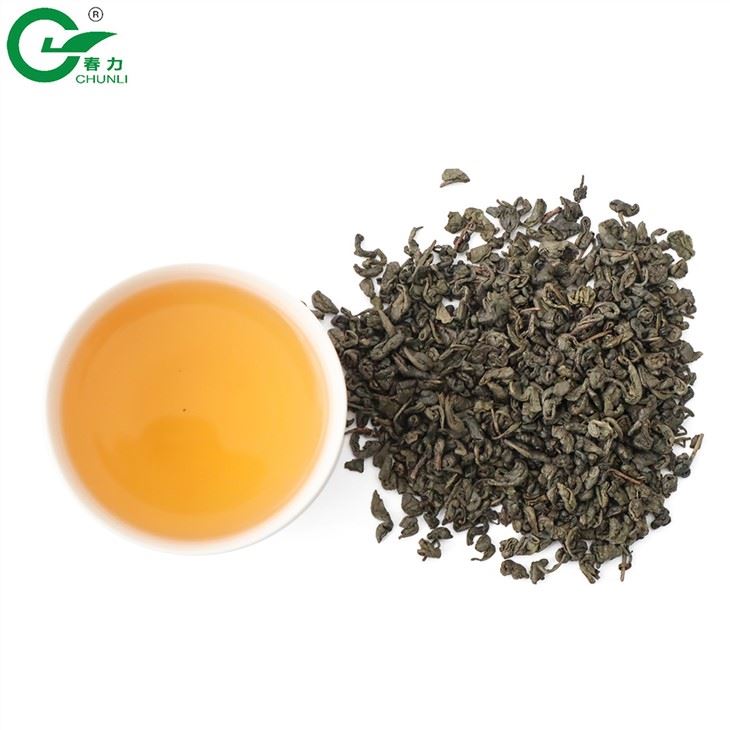
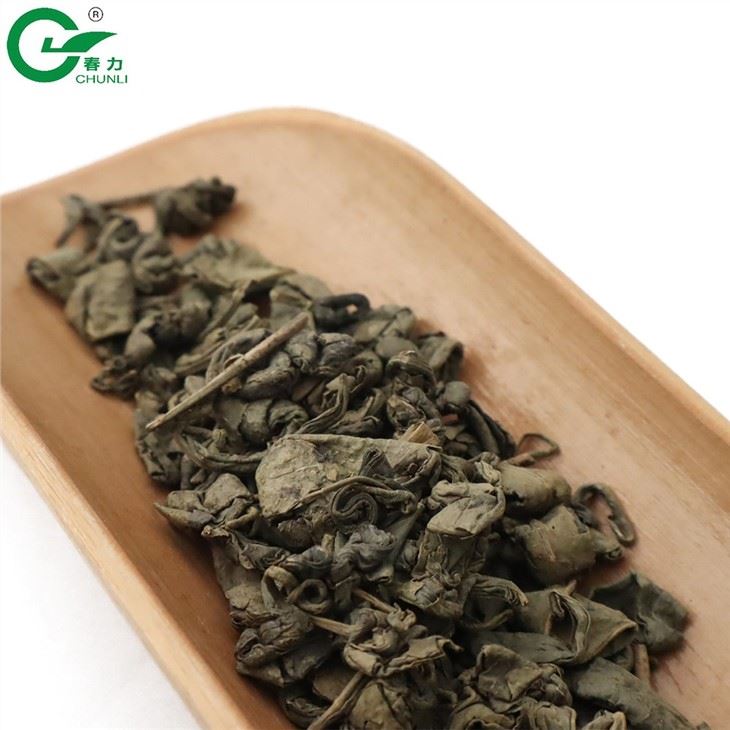


Zhejiang Chunli Tea Co., Ltd. is one of the leading manufacturers and suppliers of gunpowder green tea for sale in China. Welcome to wholesale high quality gunpowder green tea for sale at low price from our factory. If you have any enquiry about free sample, please feel free to email us.
Gunpowder Green Tea Bulk Supply - Chunli Tea × Your Brand | Payment Terms, Lead-Time Records & Pre-Shipment Controls
Zhejiang Chunli Tea Co., Ltd. supplies Gunpowder green tea in bulk under your brand, with the transaction-execution terms stated upfront: T/T 30/70, L/C at sight, or D/P; standard lead time 15–25 days; pre-shipment inspection against your written specification; 22–24 MT per 40HQ to West Africa, higher for floor-loaded bulk. This page is about what happens between your deposit and your container-not about tea grade.
Most Gunpowder supplier pages describe the leaf. This one describes the transaction. A buyer comparing two factories that both claim ISO, both claim 20+ MT per 40HQ, and both quote similar FOB numbers is not choosing between tea grades at that point-they are choosing between two sets of execution risks. The questions that separate them are: What happens to my deposit if the lot is not what the sample showed? Who inspects, against what document, and at which point in the payment cycle? If the vessel is delayed after production is complete, who carries the storage cost? If a residue result fails at destination, what is the contractual consequence? Zhejiang Chunli Tea answers these with stated terms and shipment records, not with a restatement of grade parameters.
Under Chunli Tea × Your Brand, Chunli Tea is the manufacturer and self-export licensed entity of record; your brand sits on the bulk unit or the retail pack. The relevant distinction for this page is that Chunli Tea controls both the production schedule and the export declaration-there is no trading-company intermediary between your PO and the container. That single fact changes the payment-term conversation: when a factory can declare export under its own license, it can offer documentary terms(L/C, D/P)without a third party's margin or delay sitting in the middle. The sections below set out the payment structures, the lead-time record behind them, and the pre-shipment controls that are agreed before the first deposit moves.
Payment Terms - Chunli Tea × Your Brand | What Each Structure Protects, and What It Does Not
| Structure | Typical Shape at Chunli Tea | Protects the Buyer Against | Does NOT Protect Against | Fits |
|---|---|---|---|---|
| T/T with deposit | 30% deposit on PO confirmation, 70% against B/L copy | Total loss after production starts; you hold 70% until shipment is evidenced | A lot that matches documents but not the approved sample | Most standard bulk orders; repeat programs with known grades |
| L/C at sight | Irrevocable, at sight, documents presented against contract terms | Documentary failure; supplier disappearing before shipment | Quality mismatch if the paperwork complies; discrepancies add delay and bank fees | Large first orders; unfamiliar counterparties; tender-driven purchases |
| D/P(documents against payment) | Documents released through banks against payment or acceptance | Buyer receiving documents without paying; seller shipping without a bank channel | Quality disputes after documents are released | Established relationships where L/C cost is not justified |
Payment-term note: the 30/70 T/T structure is the working standard because it splits exposure at the point where evidence of shipment changes hands. No payment instrument-T/T, L/C, or D/P-protects against the most common tea-trade dispute, which is a lot that arrives on time, with correct documents, and is not what the sample showed. That risk is addressed by the pre-shipment controls in the next section, not by the payment term. Chunli Tea states the payment options upfront so that the buyer can allocate the instrument to the risk they are actually trying to manage.
Lead-Time Record - What the Dates Are Backed By
| Lead-Time Variable | Chunli Tea Position | Verifiable Record / Note |
|---|---|---|
| Standard bulk lead time | 15–25 days after order confirmation | Stated in the FAQ and applied to standard Gunpowder bulk orders |
| 2024 export growth | Approximately 50% year-on-year in export tea volume | Reported at the factory level during the pre-Spring Festival export peak; growth under customs supervision |
| Customs clearance handling | 7×24 appointment service; "report, inspect, release" same-day handling where documentation is complete | Local customs "green channel" for tea exporters; reduces the risk of post-production document delay |
| Rail alternative(Central Asia) | "Chunli Tea" dedicated block train: 15 days Yiwu to Tashkent | 2021 record; sea freight to the same destination was approximately 2 months. Rail cuts transit, not production lead time. |
| West Africa transit(Tema) | 4–5 weeks after loading; 22–24 MT per 40HQ | Stated shipment pattern for Ghana-bound bulk; inland transit to Kumasi/Accra is separate |
Lead-time note: the 15–25 day figure covers production and booking, not ocean transit. The verifiable record that matters to a procurement manager is not a single fast shipment-it is whether the factory's export volume grew while lead time stayed inside the stated window. Chunli Tea's export volume grew approximately 50% in 2024 while the standard lead-time statement remained 15–25 days. Growth without lead-time expansion is the operational signal; a single expedited container is not.
Pre-Shipment Controls - The Mechanism That Actually Decides Whether You Get What You Paid For
| Control Point | Chunli Tea Practice | Timing Relative to Payment | Buyer Action Required |
|---|---|---|---|
| Retained reference sample | Sealed and signed sample held by both parties before production begins | Before deposit | Approve and retain the sealed sample; state it as the contractual quality reference |
| Pre-shipment inspection | Third-party inspection against your written specification, before container sealing | After production, before balance payment | Nominate the inspection body and the specification document; make the report a payment condition |
| Lot-level testing | Moisture, ash, extract, residue panel to destination standard; report issued before vessel departure | Before B/L issuance | Declare the destination MRL framework at RFQ; review the COA before releasing balance |
| Failure procedure | Written replacement, discount, return, or destruction terms agreed in advance; freight responsibility stated per outcome | Contract stage | Negotiate the clause before the first PO, not after a failed lot |
| Factory audit | Shengzhou facility open for supplier audits: production line, QC release panel, self-export license, certification originals | Before first order or during annual supplier review | Send your supplier-approval checklist; schedule the audit against the production calendar |
Procurement note: the retained sample and pre-shipment inspection are the highest-value line items in the entire arrangement, and the ones most often skipped to save a few hundred dollars. An inspection before the container sails costs a fraction of discovering the same problem at your own port, where you additionally own the freight, the duty, and the disposal. Chunli Tea accepts the inspection report as a payment condition-the balance is not released until the report is reviewed against the approved sample and the COA.
Loading Configuration & Detention Risk - Why the Packing Format Is a Financial Variable
| Configuration | 40HQ Load | Unloading Profile | Detention / Demurrage Exposure |
|---|---|---|---|
| Floor-loaded 25 kg kraft bag | 25–26 MT(bulk configuration) | Manual or forklift bag-by-bag; faster at a bag-handling warehouse | Lowest per-kg freight; detention risk rises only if the receiving dock cannot clear a floor-loaded container within the free window |
| Palletized carton | 22–24 MT | Forklift pallet discharge; faster at a DC with dock levelers | Higher per-kg freight, but lower unloading time; suits warehouses with tight free-time windows |
| Woven bag(PP)with liner | 24–26 MT | Bag handling; lighter tare than kraft | Cost-effective bulk; confirm destination warehouse accepts woven outer before booking |
| West Africa benchmark(Tema) | 22–24 MT per 40HQ for standard bulk | Port handling to inland warehouse | Detention risk concentrated at inland transit, not at loading; 4–5 week transit after sailing |
Detention note: the packing format is not a cosmetic choice. A floor-loaded 25 kg bag container maximises payload but demands a receiving dock that can clear bags within the free-time window; a palletized carton container sacrifices 2–4 MT of payload for faster mechanical discharge. The correct format is the one that matches your warehouse's unloading speed, not the one that shows the highest tonnage on the quotation. Declare the receiving constraint at inquiry and the load plan is calculated against it.
B2B Procurement FAQ - Transaction Execution, Not Tea Grade
Q1. What payment terms does Chunli Tea accept, and which one should a first-time buyer use?
T/T(30% deposit, 70% against B/L copy), L/C at sight, and D/P. For a first order with no prior relationship, L/C at sight or T/T 30/70 are the two structures that allocate risk at the documentary handover point. T/T is the working standard because it splits exposure: the deposit covers the factory's raw-material commitment, and the balance stays with you until the goods are on the water and you hold evidence of shipment. L/C adds bank intermediation at a cost; it protects against documentary failure, not against quality mismatch. The instrument should match the risk you are actually trying to manage-if the concern is "will the goods match the sample," the answer is a retained sample and a pre-shipment inspection, not a different payment term.
Q2. The 15–25 day lead time-is that production only, or production plus loading?
It covers production and booking up to container loading, after order confirmation. It does not cover ocean transit. The verifiable signal behind the number is that export volume grew approximately 50% in 2024 while the stated lead-time window remained 15–25 days. A factory that grows volume without stretching its lead-time commitment is the operational read; a single fast shipment is not.
Q3. Can we require a third-party inspection before the balance payment is released?
Yes. The pre-shipment inspection against your written specification can be structured as a condition for releasing the 70% balance. Nominate the inspection body, provide the specification document, and the report is reviewed before the balance is released. This is the control that addresses the most common tea-trade dispute-a lot that matches documents but not the approved sample. The inspection report is a payment condition, not an optional add-on.
Q4. What happens if the lot fails the pre-shipment inspection or the residue panel?
The failure procedure is agreed in writing before the first PO: replacement, discount, return, or destruction, with freight responsibility stated per outcome. The lot is held at the factory, not shipped and disputed at destination. Because the residue panel and the COA are issued before vessel departure, a failing result is caught while the goods are still under factory control. The cost of holding or reworking a lot at origin is materially lower than the cost of a failed clearance at destination, where the buyer also owns the freight and duty.
Q5. Is the 25–26 MT per 40HQ figure relevant to our warehouse if we can only unload pallets?
No-and that is exactly why the loading table separates configurations. 25–26 MT applies to floor-loaded 25 kg kraft bags; a palletized carton container loads 22–24 MT. The difference is a fill-rate trade-off: the floor-loaded container gives the lowest per-kg freight, while the palletized container unloads faster and reduces detention risk at a DC with a tight free-time window. The correct number for your quotation is the one that matches your receiving constraint, not the highest tonnage in the table.
Q6. Does Chunli Tea export under its own license, or through a trading company?
Chunli Tea has held a self-export license since 1998. When Chunli Tea is the exporter of record, the B/L exporter name matches the manufacturing entity-no trading-company intermediary sits between the PO and the container. This matters for payment terms: a factory that can declare export under its own license can offer L/C or D/P without a third party's margin or documentary delay in the middle.
Q7. What documents do we review before releasing the balance?
The COA(moisture, total ash, water extract, residue result), the packing list(net weight, tare weight, unit count, container load plan), the pre-shipment inspection report against your specification, and the draft B/L for name and destination verification. The balance is released against the B/L copy after these documents are reviewed-not against a promise of shipment.
Q8. Can we audit the factory before the first deposit, and what does the audit cover?
Yes. The Shengzhou facility is open for supplier audits covering the production line, the QC release panel, the self-export license, the certification originals(ISO / HACCP / SC / FDA), and the retained-sample system. The audit is scheduled against the production calendar so that the line is running, not idle. Send your supplier-approval checklist before the visit and the document set is prepared against it.
Hot Tags: gunpowder green tea for sale, China, suppliers, factory, wholesale, cheap, low price, free sample, 3505 Tea Green Gunpowder Sencha, Chinese Tea Factory, Gunpowder Green Tea 9501 Uzbekistan Pure Leaf, English Breakfast Tea Bags, Gunpowder Green Tea 9375, China Tea Wholesale 9775


