

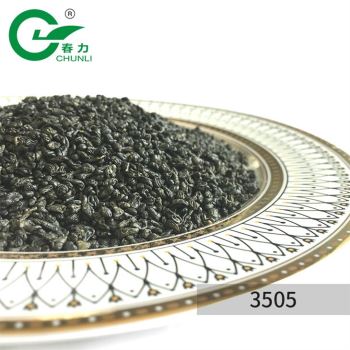
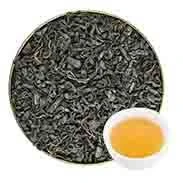
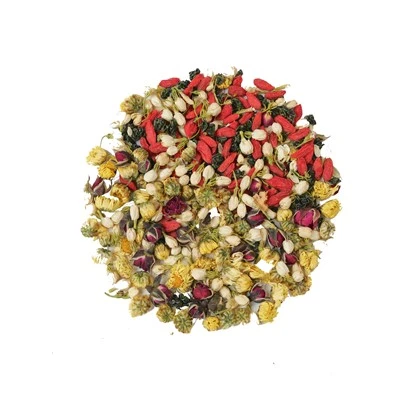
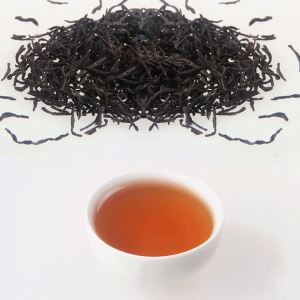


Zhejiang Chunli Tea Co., Ltd. is one of the leading manufacturers and suppliers of gunpowder tea for export quality in China. Welcome to wholesale high quality gunpowder tea for export quality at low price from our factory. If you have any enquiry about free sample, please feel free to email us.
Gunpowder Tea 9675 - Grade Comparison & Blending Base Supply |
Zhejiang Chunli Tea Co., Ltd. supplies 9675 Gunpowder green tea in bulk under your brand as a blending-base and repacking grade. Round-flat pellet, more stems than 9475, clearer yellow-green liquor than 3505-series. Positioned for North/West Africa and Middle East repackers who need a cost-controlled base that holds up on filling lines. 30 kg woven bag standard; 25/50 kg PP and jumbo bag available. MOQ 1×20'FCL. FOB Ningbo/Shanghai.
This page is built around one problem: "export quality" tells a buyer nothing, and 9675 is not a grade that can be sold on adjectives. In the Gunpowder export matrix, 9675 sits in the "no ranking" band - a round-flat pellet, noticeably more stems than 9475, and a leaf presentation that is not designed for premium retail shelves[reference:0]. That is precisely why it exists. The buyers who source 9675 are not comparing it to 3505AAA; they are comparing it to 9475 and 9575 on three variables that actually move landed cost and repacking yield: how much stem and broken leaf the lot carries, how the pellet holds up on a filling line, and whether the liquor is clear enough to carry a mint blend without turning dull. The comparison matrix below puts those variables side by side, and the rest of the page explains where 9675 fits in a repacking or blending programme.
Under Chunli Tea × Your Brand, your brand appears on the 30 kg woven bag, the 25/50 kg PP sack, or the private label retail pack; Chunli Tea is the manufacturer of record and issues the lot COA, packing list, and phytosanitary certificate against the format you order. The commercial logic is stated plainly: 9675 is a blending-base and repacking grade, not a retail-showcase grade. If your requirement is a tight, small-pellet leaf for premium loose-leaf shelves, 3505AAA or 3505AA is the correct specification. If your requirement is a cost-controlled base that can be blended with mint or repacked into consumer units in a price-sensitive market, the matrix and packing sections below set out what 9675 actually delivers.
9675 vs 9475 vs 3505 - What Actually Changes on the Line
| Comparison Variable | 9675(Blending / Repacking Base) | 9475(Economy Bulk) | 3505 Series(Premium Retail) |
|---|---|---|---|
| Matrix position | No-ranking band; round-flat pellet, relatively more stems[reference:1] | Grade 5; thick pellet with a few yellow flats and old stems[reference:2] | Premium; unity and integrity, heavy body, clean leaf[reference:3] |
| Pellet shape / curl | Round and flat; looser roll than 3505, not pinhead-tight | Thicker, more open roll; pellet often exceeds 5 mm[reference:4] | Small, tightly rolled pellets; high rolling density |
| Stem / broken content | Relatively more stems than 9475 and 3505; declared per lot | Old stems and yellow flats present; higher visual defect load | Minimal stem; clean pellet stream |
| Dry-leaf colour | Dark green with a slightly duller surface than premium grades; flat-sided pellets reflect less light | Yellow-green tendency; less jade than premium grades[reference:5] | Deep jade-green with a slight luster |
| Liquor(汤色) | Bright yellow-green; clear enough for mint blending; not as deep as 3505 but cleaner than 9475 | Fresh with a yellow-liquor direction; can turn flat under heavy mint load[reference:6] | Bright yellow-green to deeper green; clean and layered |
| Repacking behaviour | Round-flat pellet tolerates volumetric filling; lower dust generation than tightly rolled small pellets that shatter | Larger, more irregular pellet; higher risk of bridging in narrow filler tubes | Tight pellet flows well but fine dust from broken pellets can migrate through filter media |
| Cost position(FOB reference) | Below 3505-series; above or near 9475 depending on crop and stem spec | Lowest band of the three; economy grade[reference:7] | Highest band; premium retail positioning |
| Best-fit market / use | Middle East and West Africa repackers; mint-blend base where clarity matters; local小袋 filling | High-volume economy retail; markets that prioritize price over liquor clarity | EU / Western retail; premium loose-leaf and specialty |
Matrix note: the three grades are not a simple "good-better-best" ladder. 9675 sits between 9475 and 3505 on cost, but its round-flat pellet and brighter liquor make it a different tool-better suited than 9475 to mint-blend bases where a flat, dull cup is a defect, and better suited than 3505 to repacking lines where a very tight pellet generates dust. The correct grade is the one that matches your blend target and filling equipment, not the one with the highest number.
Where 9675 Fits in a Blending Programme - Chunli Tea × Your Brand
| Blending Scenario | Why 9675 Works | What to Specify in the PO | Market Fit |
|---|---|---|---|
| Mint-tea base(Maghreb-style) | Bright yellow-green liquor carries mint without turning muddy; round-flat pellet unfurls at a moderate rate, releasing body before the mint dominates | Liquor clarity target; stem ceiling; moisture ≤7.0% | Morocco, Algeria, Tunisia, Libya, Mauritania |
| Local repacking into 25–500 g consumer units | Round-flat pellet feeds through volumetric and auger fillers with less dust than tightly rolled small pellets; lower rejection at the sealing head | Particle size band; dust content ceiling; bag/box format | West Africa(Mali, Senegal, Guinea), Middle East repackers |
| Two-grade cost averaging | 9675 can be blended with a higher grade(3505AA or 9475)to hit a target cost and a target cup simultaneously-9675 carries body and yield, the higher grade carries aroma and colour | Ratio by weight; target liquor score; blend homogeneity method | Buyers serving multiple price tiers from one container |
| Private-label economy retail | Cost structure allows a competitive shelf price in markets where 3505 is priced out; round-flat pellet reads as "gunpowder" to the consumer even at a looser roll | Brand artwork; net weight; barrier film spec; label claim review | West Africa supermarket and kiosk channels; Middle East value brands |
Blending note: 9675 is not a "filler" that disappears into a blend. Its round-flat pellet and yellow-green liquor contribute body and a recognizable gunpowder character. The mistake buyers make is treating 9675 as interchangeable with 9475 and then discovering that the mint blend lacks brightness. The two grades are close on cost but different on cup-specify the liquor target, not just the grade code.
Repacking Formats - What Goes Into the Container, and What Comes Out at Destination
| Format | Net Weight | Who It Suits | Repacking / Handling Note |
|---|---|---|---|
| 30 kg woven bag with liner | 30 kg | Standard export format for the 9375/9475/9575/9675 family[reference:8] | Bag-cutting and tipping into a local hopper; common in West Africa and Central Asia |
| 25 kg PP sack with liner | 25 kg | Repackers with manual or semi-automatic filling lines | Lighter unit; easier for small-format repacking without a forklift |
| 50 kg PP sack | 50 kg | High-volume blenders feeding a silo or mixer | Lowest unit cost per kg; requires mechanical handling |
| Private label retail unit(25 g–500 g) | As specified | Buyers wanting Chunli Tea to pack the finished consumer unit | MOQ 2 MT; artwork and film specification confirmed at approval |
Repacking note: 9675's round-flat pellet is the reason it behaves differently from 3505 on a filling line. Tightly rolled small pellets(3505)can shatter at the filler head and generate dust that migrates into seals; the looser 9675 roll compresses rather than fractures, which is why repackers in West Africa and the Middle East use it as a base for local small-format filling. If your line runs volumetric cups or auger fillers, specify the dust ceiling and the particle band in the PO-the packing format alone does not control line performance.
Supply Capacity & Commercial Terms - Chunli Tea × Your Brand
| Item | Position | Procurement Relevance |
|---|---|---|
| Gunpowder digital workshop(planned) | 4,000 tons/year under the four-workshop build-out | Dedicated matrix-grade capacity, isolated from premium-grade scheduling |
| Total annual capacity target | 20,000 tons | Annual framework volume for matrix grades can be absorbed |
| Documented export markets | Morocco, Algeria, Mali, Mauritania, Uzbekistan, Senegal, Guinea | Destination compliance experience already embedded |
| MOQ | 1×20'FCL for standard 30/25/50 kg bag; private label 2 MT | Full-container trial without an annual commitment |
| Lead time | 15–25 days after confirmation for standard bulk | Private label adds 5–10 days for artwork and film |
| Loading port | Ningbo / Shanghai | Container plan confirmed against bag format and destination weight limits |
B2B Procurement FAQ - 9675 Grade Selection and Repacking
Q1. What is the actual difference between 9675 and 9475, and why would a buyer pick 9675 instead of the cheaper 9475?
9475 is Grade 5 with a thicker, more open pellet and a yellow-green colour tendency; it is the cheaper of the two[reference:9]. 9675 sits in the no-ranking band with a round-flat pellet and relatively more stems[reference:10]. The buyer who chooses 9675 over 9475 is paying a small premium for a brighter, clearer yellow-green liquor that holds up better in a mint blend, and for a round-flat pellet that repacks with less dust on a filling line. If the application is straight economy retail where liquor clarity is secondary, 9475 is the rational lower-cost choice. If the application is a mint-blend base or a local repacking programme where a flat cup or filler dust is a defect, 9675 is the grade that avoids that defect.
Q2. Does 9675 have more stems than 9475? How is that acceptable?
9675 is characterised by relatively more stems than 9475 and the 3505 series[reference:11]. This is a deliberate grade characteristic, not a quality failure. In a blending or repacking context, a moderate stem presence contributes body and yield at a lower cost; the buyer's specification should declare a stem ceiling rather than expect zero stem. If your market requires a visual stem-free leaf, 9675 is not the correct grade-3505AA or 3505AAA is. The COA and retained sample state the stem level for the lot, so the buyer is not discovering it at destination.
Q3. What does the liquor actually look like, and why does that matter for mint blending?
9675 brews to a bright yellow-green liquor-cleaner and brighter than the yellow-liquor direction of 9475, though not as deep as the jade-green of 3505[reference:12]. In a Maghreb-style mint blend, the tea base has to carry the mint without turning the cup muddy or dull. A 9475-based blend can go flat under a heavy mint load; a 9675 base holds a brighter cup at a lower cost than 3505. That is the specific reason 9675 appears as a mint-blend base grade in this matrix.
Q4. Why does pellet shape matter for repacking, not just for appearance?
Because the pellet's behaviour at the filling head determines line speed and rejection rate. 9675's round-flat pellet compresses rather than shatters under volumetric or auger filling, generating less dust than a tightly rolled small pellet. Dust is the enemy of a repacking line: it migrates into seal zones, causes underweight fills, and settles as waste in the carton. A looser 9675 roll trades a little visual tightness for better line behaviour-which is exactly the trade a repacker wants.
Q5. Which markets are the right fit for 9675, and which are not?
Right fit: Morocco, Algeria, Tunisia, Libya, Mauritania for mint-blend bases; Mali, Senegal, Guinea and Middle East repackers for local small-format filling; buyers running a two-grade cost-averaging programme. Not the right fit: EU or Western retail shelves where a tight, stem-free, deep-jade pellet is the expectation; premium loose-leaf programmes where 3505AAA is the correct specification. The grade is a tool, not a universal solution.
Q6. Can 9675 be blended with a higher grade in one container or one blend?
Yes, on both counts. 9675 can be blended with 3505AA or 9475 to hit a target cost and a target cup-9675 carries body and yield, the higher grade carries aroma and colour. It can also be shipped in a mixed-grade container against a single PO, with the COA issued per grade/lot. The blend ratio and the container split are both calculated against your target liquor score and cost ceiling, not left to the factory's discretion.
Q7. What documents ship with a 9675 lot?
Packing list(net weight, tare weight, unit count, container load plan), COA(moisture, total ash, water extract, stem/broken content, grade stated as 9675), phytosanitary certificate, certificate of origin, and health certificate where required. Destination-specific residue panels are issued per lot or per contract frequency. The COA states the grade as 9675-not a generic "Gunpowder" line-so that destination inspection cannot confuse it with a higher grade.
Q8. What is the MOQ and lead time, and can we start with a 20'FCL trial?
MOQ is 1×20'FCL for standard 30/25/50 kg bag; private label starts at 2 MT. Lead time is 15–25 days after confirmation for standard bulk; private label adds 5–10 days for artwork and film. A 20'FCL trial is the normal entry point for a first order-it proves the grade, the packing, and the repacking behaviour before a larger commitment.
Hot Tags: gunpowder tea for export quality, China, suppliers, factory, wholesale, cheap, low price, free sample, Green Tea Gunpowder Tea 9375 in Slimming Tea Cheap OEM, Algeria Tea, Alibaba Chine Green Tea 3505 3a, Organic Gunpowder Tea 9501 Pure Leaf Green Tea, Gunpowder Oolong Tea, Chinese Slimming Green Tea 9375


