

Those who love tea have always valued water. The phrase "water is the mother of tea" is as familiar to tea lovers as "being at the beginning of a human being with good nature".
However, when we boil water daily, we may forget to pour out the boiling water in time.
So is water that has been boiled many times harmful? Will the brewed tea taste bad?
Many people believe that water boiling more than once must not be drunk, because after repeated boiling, the content of nitrite is high. Drinking such kind of water regularly will interfere with gastrointestinal function, and in severe cases, the body will become hypoxic and coma.
Indeed, nitrous acid is a category 2A carcinogen, and pickled vegetables and cooked leftovers are prone to produce nitrite. Ingestion of 0.3 to 0.5 grams of nitrite can cause poisoning, and 3 grams can cause death.
So, how much nitrite is in the water that is repeatedly boiled?
There are professional testing personnel for the same brand and the same batch of raw water (unheated water), thousand boiled water (heated repeatedly in the drinking fountain for more than 12 hours), boiled water (heating boiling water at one time), and overnight water in a kettle (after heating and boiling once, pour the water in the household thermos overnight), and the overnight water in the thermos cup (the water in the common thermos cup after the one-time heating and boiling) was tested for composition. The results showed that only the overnight water in a kettle detected 0.014mg/L Nitrite.
According to the "Sanitary Standards for Drinking Water" (GB5749-2006), the limit of nitrite in drinking water is 1mg/L.
In the above experiment, although nitrite was detected in the overnight water in the thermos, the content was far below the limit and there was no risk of drinking.
In another experiment, after boiling the water 10 times, no nitrite was detected. After 181 times of repeated boiling, the content of nitrite ion in the water was 3.53μg/L. Although it exceeded the hygienic standard (2μg/L) of bottled water, it was still safe.
This is an extreme experiment. Who would boil water 181 times in life?
So, does the repeatedly boiled water affect the tea taste?
"Environmental Science and Technology" published an experiment to observe the hardness of water by detecting changes in the concentration of calcium and magnesium ions in water.
After repeated boiling for 5 times, the hardness of the water changed from 35.45 mg/L of raw water to 77.17 mg/L; the volume of water also evaporated from the original 1000 mL to 485 mL, and the quality of calcium and magnesium remained basically unchanged throughout the process.
This is the result of instrument testing, so, will there be a big difference in taste?
In order to verify this problem, we conducted an experiment with the mineral water.
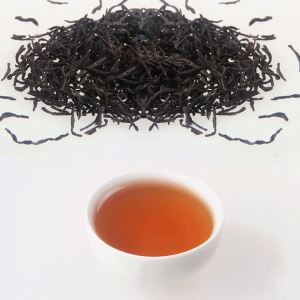
It is boiled repeatedly from 9 in the morning until about 5 in the afternoon. After that, they brewed a green tea and black tea separately, and asked tea masters to make a blind comment without the tea critic's knowledge.
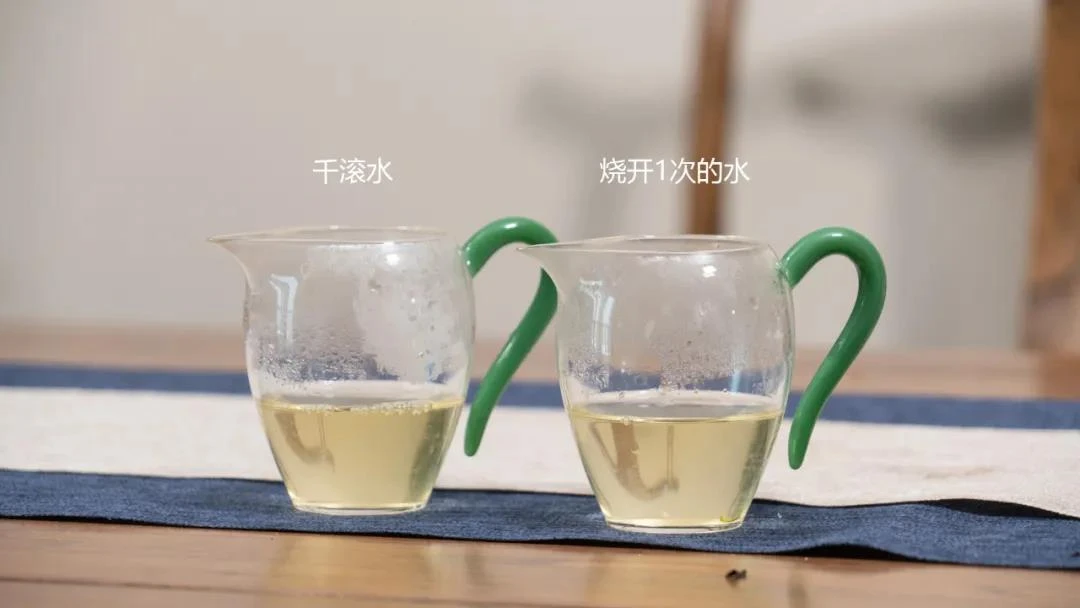
It can be found from the color of the green tea that the two are almost the same. After repeatedly smelling the fragrance and tasting the soup, the tea critic slightly noticed the difference, and pointed out that the green tea brewed with water that was boiled once had a more pronounced aroma and a slightly softer taste, but the difference between the two was extremely small.
To confuse the tea master, we reversed the order of the water when brewing black tea.
This time, the difference is also not obvious. Four tea critics tasted this tea, and three of them couldn't tell which one was brewed with 1000 boiling water and which one was brewed with boiling water once.
Both in terms of soup color and taste, the two are very similar, only the aroma is different: tea leaves brewed with water once boiled, the aroma is more pronounced; tea leaves brewed with thousand boiling water, the aroma is more subtle.

This result shows that even after the water is repeatedly boiled, calcium and magnesium ions will precipitate and the hardness will increase, but it is far from the extent that it significantly affects the taste of tea soup.
Therefore, if you accidentally boil the water repeatedly, you do not need to pour it away. You can drink tea with confidence, and it will not have a great impact on the quality of the tea soup.