

On November 27, 2019, the United Nations General Assembly declared May 21 every year as "International Tea Day" to praise the economic, social and cultural value of tea and promote the sustainable development of global agriculture. The Food and Agriculture Organization of the United Nations announced that the theme of the first "International Tea Day" in 2020 is "Tea and the World Common Products Sharing". Its purpose is to spread and promote tea culture, activate tea trade, promote the development of tea industry, and drive tea farmers to increase their incomes. The establishment of "International Tea Day" will undoubtedly help the world to recognize Chinese tea culture, and will help China to blend and learn from other countries' tea cultures and coordinate the development of the tea industry.
China is the hometown of tea and the birthplace of tea culture
Cha is originally from Jiamu in southern China. Tea is used as a health drink. It can be said that the ancient people in southern China contributed to the Chinese food culture and the Chinese people contributed to the world food culture.
The origin of the tea tree has a history of at least 60,000 to 70,000 years, and the discovery and use of tea by humans can be traced back to four to five thousand years ago. The legend of "Shen Nong Taste Baicao" may not be credible, but the book "Shen Nong Baicao Jing" in the early Western Han Dynasty shows that at least our ancestors had realized the medicinal effects of tea. "The Classic of Tea" written by the tea sage Lu Yu of the Tang Dynasty is the first monograph on tea in China and the world. It comprehensively discusses the characteristics, quality, origin, preparation and cooking methods and utensils of tea. It not only reflects that our ancestors are the world’s The earliest discovery of the function of tea and the development of drinking is also a good explanation of the splendid tea culture in ancient China. It is not an exaggeration to say that the tea originated from the Shennong family, heard from the Lu Zhougong, prospered in the Tang Dynasty, flourished in the Song Dynasty, and popularized in the Ming and Qing Dynasties is the national drink of the Chinese nation.
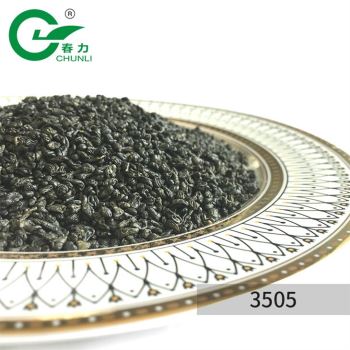
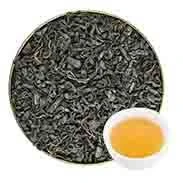
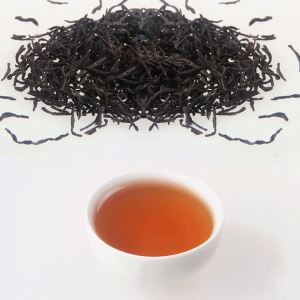
Chinese tea-making and drinking have a history of thousands of years. It has gone through different stages of development for medicinal, edible, wine and beverage. There are different drinking methods such as brewing tea, steaming tea, sencha, brewing tea, and brewing tea. Green tea, black tea, dark tea, white tea, yellow tea, scented tea and other different types of tea, with different purposes such as tea drinking, tea tasting, and respecting tea, tea sets, refreshments and other related items, as well as tea ancestors, tea gods, tea art, Different derived cultures such as the tea ceremony and tea customs are sufficient to illustrate the breadth and depth of Chinese tea culture.
Tea is not only an agricultural product with important economic value and a health product with good health value, but also a medium for cultural exchanges among people from different regions and different ethnic groups, and it is itself an important cultural symbol.
Tea is an important agricultural cultural heritage
An obvious example is that of China’s 15 Globally Important Agricultural Cultural Heritage (GIAHS), there are 2 tea heritages, namely the ancient tea plantation and tea culture system in Pu'er, Yunnan, and the jasmine planting and tea culture system in Fuzhou, Fujian; in 2019 In the second batch of 36 China’s global important agricultural cultural heritage tentative lists announced by the Ministry of Agriculture and Rural Affairs, there are 6 tea heritages, namely the Tieguanyin tea cultural system and Fuding white tea cultural system in Anxi, Fujian, and the Yulu tea cultural system in Enshi, Hubei. , Hubei Chibi Yangloudong Brick Tea Culture System, Guizhou Huaxi Ancient Tea Tree and Tea Culture System, Yunnan Shuangjiang Mengku Ancient Tea Garden and Tea Culture System. Among the 5 batches of 118 important agricultural cultural heritages issued by the Ministry of Agriculture and Rural Affairs so far, there are 15 tea heritages. In addition to the above 8 items, there are also the Longjing tea culture system of West Lake in Hangzhou, Zhejiang, and the Phoenix Dancong tea culture system of Chao'an, Guangdong. Of course, due to various reasons, a large number of qualified projects have not yet been listed.
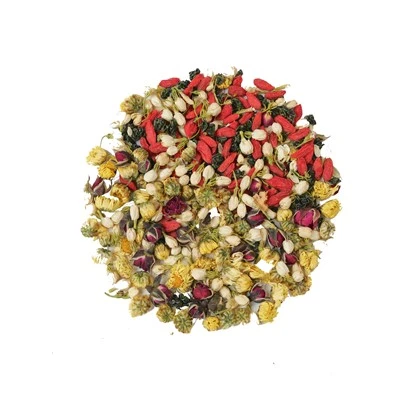
Moreover, some agricultural cultural heritage sites that seem to have nothing to do with tea are also important producing areas of tea. Such as white tea from Anji, Zhejiang and Mogan Huangya from Deqing. There are also those mulberry leaf tea produced from the mulberry pond system in Huzhou, Zhejiang and the ancient mulberry tree group of the Xiajin Yellow River in Shandong, as well as bamboo leaf tea, wolfberry tea, tartary buckwheat tea, and eight-treasure tea combined with the core elements of other heritage sites and many more.
For the Global Important Agricultural Cultural Heritage of the United Nations Food and Agriculture Organization and China's Important Agricultural Cultural Heritage of the Ministry of Agriculture and Rural Affairs, food and livelihood security, agricultural biodiversity and ecosystem service functions, traditional farming techniques, related agricultural culture and ecological and cultural landscapes, It is not only the basic feature of the heritage system, but also the basic standard for identification.
The agricultural cultural heritage provides a new perspective for people to watch tea. The tea culture system from the perspective of agricultural cultural heritage is no longer just agricultural products or food, not only tea art, tea ceremony, but a society that includes species resources, livelihood security, farming technology, folk culture, ecological landscape, etc. -Economy-natural complex ecosystem. In this composite system, we can also experience the ecological agriculture ideas of material circulation, species diversity, and harmonious symbiosis, the survival wisdom and health value of biological use, and its significance in the "Healthy China" strategy.
It is hoped that through the "International Tea Day" activities, tea agricultural cultural heritage can better reach society and the public, and further promote Chinese agricultural cultural heritage to the world, so that people can better appreciate agricultural cultural heritage including agricultural cultural heritage. The infinite charm of Chinese traditional culture.