

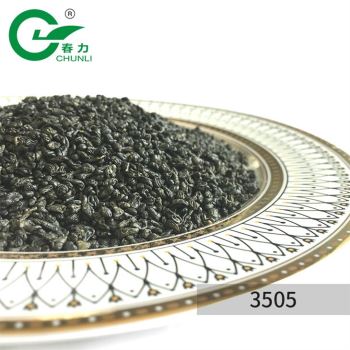
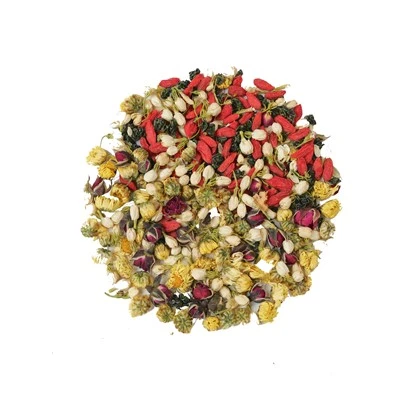
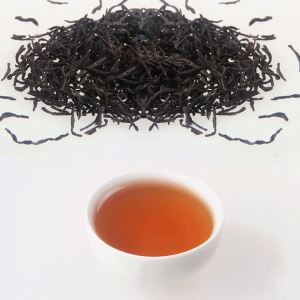
How did the tea rooted in China develop into beverages and enter the homes of ordinary people? When did tea spread out and gradually became one of the main commodities on the Maritime Silk Road? What era does this piece of green tea move? This exhibition selects various types of exhibits such as export tea samples, export tea sets, paintings, ship models, etc., from the four perspectives of the origin, production, circulation and cultural exchanges of tea, presenting the audience with the historical fragrance of the Maritime Silk Road.
"Sea Silk" tea culture has a long history
In Tanmen Harbor, there are row upon row of fishing boat masts, and in the harbor not far away, the South China Sea Museum is majestic, like a huge ship riding the wind and waves in the turbulent South China Sea. The exhibition "Green Gold-Tea Trade on the Maritime Silk Road" currently on display in Hall 8 attracted many citizens and tourists to stop and watch.
The Nanhai Museum was built by the Hainan Provincial Party Committee and the Provincial Government in response to the national "One Belt One Road" initiative. The Maritime Silk Road series exhibitions are an important topic in the museum's exhibition system. In September 2020, the Nanhai Museum, together with the Capital Museum, Fujian Museum, Zhejiang Provincial Museum and other ten museums, jointly planned and launched the exhibition "Long Traveling Miles-Longquan Celadon on the Maritime Silk Road", which is the museum's Maritime Silk Road series. The first chapter of the exhibition.
"Like silk and porcelain, tea is also an important witness to the exchange and prosperity of the Maritime Silk Road." Xin Lixue, director of the South China Sea Museum of China (Hainan), said that in order to expand the spread of Maritime Silk Road culture and promote traditional Chinese culture, the museum has joined forces. China Tea Museum, Shanghai China Maritime Museum, Shanghai History Museum, Guangzhou Shisanhang Museum and Zhoushan Museum jointly planned and launched the exhibition "Green Gold-Tea Trade on the Maritime Silk Road", which became a series of exhibitions on the Maritime Silk Road in the museum. Another chapter of the book.
Tea, a miraculous plant from China, is one of China's important contributions to mankind and world civilization.
As the saying goes, "Seven things to open the door, firewood, rice, oil, salt, sauce and vinegar tea", the status of tea in Chinese social life can be seen. China is the first country to discover and use tea. For thousands of years, tea has become an indispensable and unique drink through Chinese wisdom.
But when it first encountered humans, it was used as a prescription for blind detoxification. Lu Yu's "Tea Classic" records: Tea is for drinking, and it originated from Shennong's family. The "Materia Medica" has a record that "Shen Nong tastes a hundred herbs, and encounters seventy poisons in one day, and gets tea to relieve them."
The Tang Dynasty was a period of extremely prosperous development of tea culture in ancient my country. It is said that tea flourished in the Tang Dynasty and flourished in the Song Dynasty. Tea in the Tang Dynasty became one of the main commodities and entered people's daily life. Many famous teas and tribute teas appeared one after another. It was during this period that tea began to be taxed, tea began to have words, and tea began to become a book. "Since Lu Yu was born in the world, the world has learned new tea", the publication of Lu Yu's "Tea Classic" in the mid-Tang Dynasty pushed tea culture to an unprecedented height.
It was from that time that tea was spread to North Korea, Japan and other countries and regions in Southeast Asia via the East China Sea. After the 17th century, the development of navigation technology promoted frequent trade exchanges between the East and the West, and tea was also spread to more distant Europe and the Americas. , Africa and other places.
With the prevalence of tea-drinking in Europe, tea gradually became an important cargo for ocean-going merchant ships. It was not until the 1820s that tea replaced silk and became the main commodity imported into Europe. On the stage of this global trade, one after another characters appeared, and the protagonist, Chinese tea, went through a complicated process one after another, was put into a tea box, and sailed across the ocean to the other side of the ocean to continue the next journey.
Precious collection depicts colorful tea culture
In the showcase, the sculpture "Bronze Statue of a Man in Qing Bong Tea" by Otto Hoffman (1885-1915), Germany, can be described as lifelike. I saw the man was thin, holding the tea tray in both hands, and staring at the tea set with his head down, as if he was afraid that the tea would be spilled because of his steps. Take a closer look, the clothes are still carved with traditional Chinese patterns, and the braids on the back of the head are made of fine wool.
The Qing Dynasty was the most prosperous period of the teahouse industry in Chinese history. All kinds of teahouses were scattered in urban and rural areas. They were indispensable public places in people's daily life, and were the center of social activities and leisure and entertainment. They composed the colorful teahouse culture in modern times. In the exhibition, the Qing Kangxi decals from the China Tea Museum, including the Qing Kangxi decals hollowed out four-dimension plum and bamboo double-clear elliptical purple clay pot, and the Qing Kangxi Taishi's button decals and dragon-patterned purple clay large pots, are amazing.
The great development of the tea industry has also contributed to the prosperity of the tea trade. At that time, the tea producing areas exported from China to Europe were mainly in Guangdong, Shanghai, Fujian, Anhui, Jiangxi, Jiangsu, and the Hubei and Hunan regions. Before the 1840s, China had been a major supplier to the world tea market.
The "19th Century Guangzhou Thirteenth Chamber Glass Painting" from the collection of Shanghai China Navigation Museum is very precious. In the painting, there are Chinese fishing boats, lucky boats, dragon boats, sailing boats, and steamships of the British East India Company on the Pearl River. The vying for hundreds of boats records the glorious history of the Thirteenth Lines of Guangzhou in the Qing Dynasty.
Guangdong is located on the coast of the South China Sea, with many good ports in the fjords. Historically, Guangdong has been an important center port for China's and overseas trade. Since the Han Dynasty, it has been an important hub for Chinese and foreign maritime traffic and trade. In 1757, the Qing government promulgated the "One-Port Commerce" decree, making Guangdong the only legal port for China's foreign trade. With its advantageous geographical location and special policies, Guangdong has monopolized the trade between China and the West by Sea Road for nearly a century. Tea, porcelain, silk and other commodities have been continuously sold from Guangzhou to all parts of the world. Guangzhou has also become a production base and transit for Chinese foreign art works. base.
In addition to Guangzhou, Fuzhou is also an important port for tea trade along the Maritime Silk Road. Fujian is a major tea-producing province. The tea areas in Northeast Fujian and Northwest Fujian can be transported to Fuzhou more conveniently by the Minjiang River. Abundant tea production and convenient transportation make Fuzhou tea market rise rapidly. In 1844, Fuzhou was opened as a foreign port, but due to various reasons, no large-scale tea trade was formed. Until the outbreak of the Taiping Heavenly Kingdom War, the channels for exporting Fujian tea from Guangzhou and Shanghai were blocked. The Qing government immediately lifted the ban on tea exports from Fuzhou Port. Fuzhou Port developed rapidly. . In 1863, the total export volume of Fuzhou Port was second only to Shanghai.
The collection reproduces the "Sea Silk" tea trade industry chain
Tongcao painting is a kind of watercolor painting painted on thin slices cut from the stems of Tongcao. As a unique traditional Chinese technique, it flourished in Guangzhou in southern China in the 19th century. It was exported and sold to the world at that time. Local customs, official life, folk customs and customs, etc., are called "Oriental postcards." In this exhibition, the green tea trade paintings brought by the Thirteenth Line Museum in Guangzhou depict vivid and complete scenes with clear details of the characters, vividly showing the process of tea planting, production, packing, weighing, and purchasing.
The exhibition commentator introduced that after the first Opium War, China was forced to open Guangzhou, Xiamen, Fuzhou, Ningbo, and Shanghai as trade ports, and foreign businessmen could directly contact all merchants in the trade ports. As a result, the teahouses of this period replaced the thirteen tradesmen and became the intermediary institutions of the tea trade between China and foreign countries. The production and circulation system of the tea trade changed into: tea farmer, tea vendor, tea shop, tea house, tea store, and tea store. Compradors, foreign firms, and foreign consumers. In the showcase, a list of tea transportation lists, clarifications and other collections from the late Qing Dynasty reproduced the huge industrial chain behind the tea trade.
Several major European trading companies have benefited tremendously from this industry chain.
In the exhibition, a tea sample with a history of nearly 300 years leads people back to the turbulent trade era. "This tea sample is very precious. It was salvaged from the shipwreck of the Swedish Gothenburg ship carrying 370 tons of tea. The China Tea Museum is fortunate to preserve two copies. This is one of them," said Zhang Peilan, deputy curator of the South China Sea Museum.
On January 11, 1745, the ocean-going merchant ship "Gothenburg I" of the Swedish East India Company departed from Guangzhou to return home. The ship was loaded with about 700 tons of Chinese goods, including tea, porcelain, silk and spices. After eight months of voyage, the Gothenburg suddenly hit a rock and sank in the sea about 900 meters away from the port of Gothenburg. In 1984, the Swedes discovered Gothenburg sleeping on the bottom of the sea. Until 1986, a new round of salvage began, and the salvage work continued until 1993. For hundreds of years, people have salvaged a large number of tea leaves and exquisite porcelain for tea drinking.
In the 18th century, the British East India Company began to dominate the world's tea trade, and gradually mastered the monopoly power of China's tea trade, manipulated tea sales, restricted the quantity of tea imported into the UK, controlled the price of tea, and monopolized the international tea market. Chinese tea shipped and sold by the British East India Company accounted for 33% of all tea sold in Guangzhou in the 1770s, and reached 80% by the beginning of the 19th century.
With the spread of tea leaves overseas, there are also Chinese tea processing technology, tea planting technology, tea drinking methods, tea etiquette and exquisite tea sets, etc. The fragrance of tea has become a trend. Tea on the Maritime Silk Road is not only "green gold", it has also become a disseminator of Chinese culture.